AI - EDITION BERLIN
Taketo Muroi - Afterimage 8
Taketo Muroi - Afterimage 8
Couldn't load pickup availability
Technique: Promptography on Hahnemühle Fine Art paper
Image size: 30 x 30 cm
Edition: 3 + 1 AP
Year: 2025
Afterimage 8
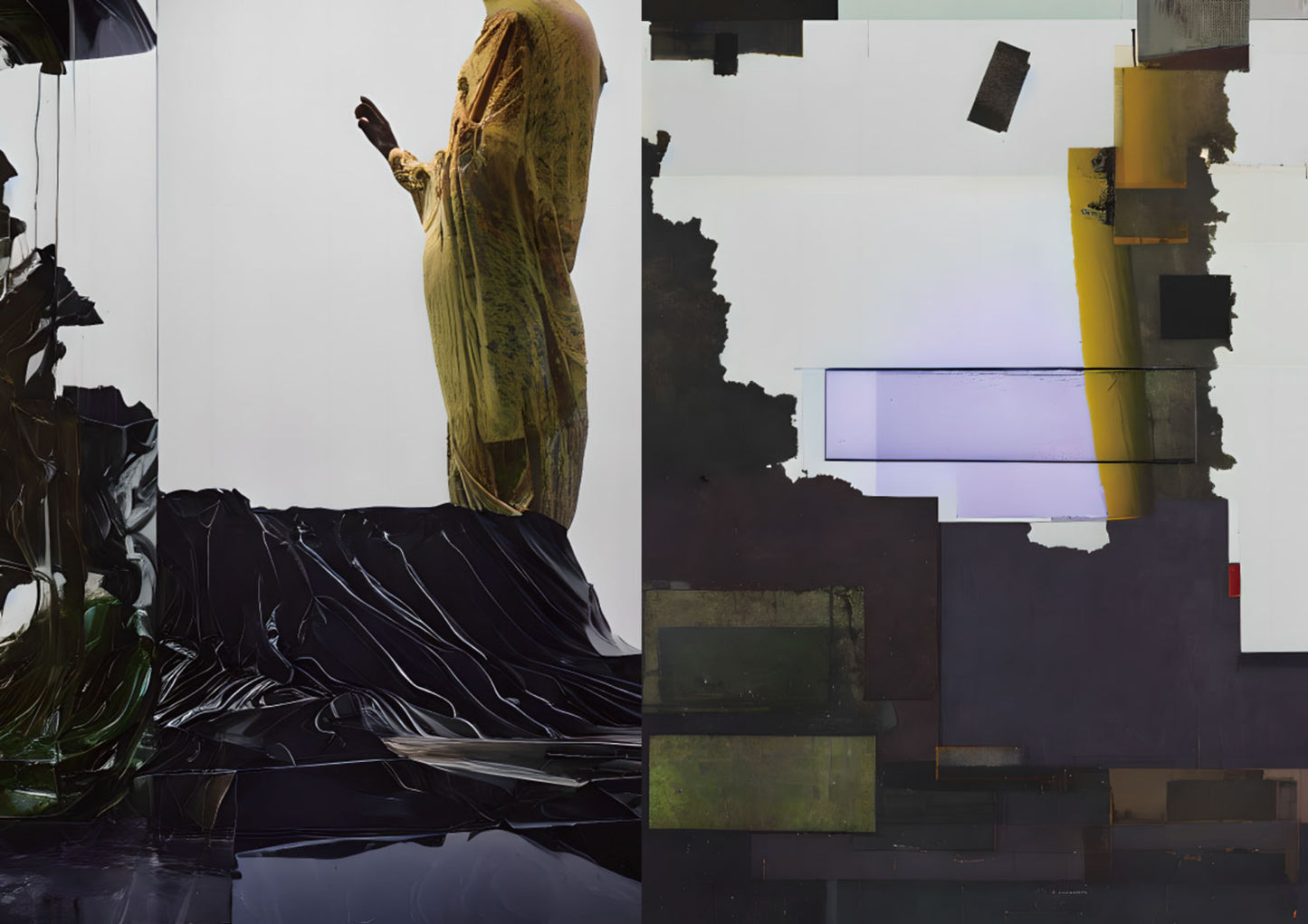
Afterimage 8 sets a particular tone within the series by addressing the question of the enduring influence of historical figures and collective images. The work is again divided into two parts, but this time the left half appears almost iconic: a fragmented, standing figure, shrouded in a golden material reminiscent of sacred robes. The body seems to rise from a dark, flowing mass, as if simultaneously supported and bound. The figure is incomplete, anonymized, robbed of its face – more appearance than person.
The right half of the image confronts this almost spiritual presence with a harsh, constructed visual architecture. Overlapping surfaces, cuts, digital blocks of color, and empty spaces create a visual field reminiscent of data fragments, archival remnants, or damaged storage devices. History here appears not as a narrative, but as a layering: fragile, incomplete, and technically mediated.
The interplay of these two elements creates an afterimage of former heroic figures from Japanese history—samurai, spiritual leaders, symbolic authorities—whose meaning has shifted over time. In Japanese culture, the hero is traditionally less a triumphant figure and more a bearer of duty, transience, and sacrifice. Afterimage 8 reflects this change: The figure remains, but its narrative clarity has vanished. What remains is an energetic imprint.
Even interpreted animistically, this figure retains its power. It is not a dead relic, but a repository of experience, memory, and moral tension. At the same time, the right half of the image points to the media-driven translation of this past: history is no longer remembered through rituals, but through image systems, archives, and algorithms – and in doing so, inevitably distorted.
From a Zen Buddhist perspective, the work explores the theme of letting go of fixed meanings. The hero detaches himself from myth, becoming part of an open field of perception. For Taketo Muroi, this afterimage is not a loss, but a state of productive emptiness: a space in which history is not concluded, but continues to have an effect – quietly, fragmented, and beyond definitive interpretation.
Share